Share Moving on! Dear visitor, I moved my website to http://www.matthiasroder.com. Please continue reading there!— Matthias Miscellanea May 30 1
Share Developing the Future Media Market as an IMZ Ambassador I feel very honered that the board of the International Music + Media Centre (IMZ) has...Read More Miscellanea Music Business Nov 2 1
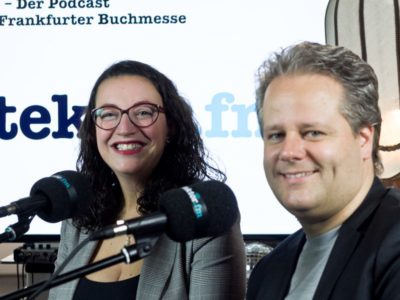
Share “We can use much more of our creative potential with the help of machines!” A podcast on the Sonophilia Network for Creative Leadership by detektor.fm that was done with Seda and I during the Frankfurt Bookfair in 2017. Click here for the original posting. Digitalization Miscellanea Technology Oct 16 0
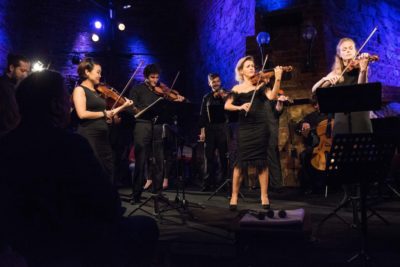
Share Classical Music, VR Technology and a Subterranean Club in Leipzig Last summer I had a surprise visitor in the Karajan Institute in Salzburg. A young musician...Read More Miscellanea Dec 15 3
Share Listening Faster: How Digital Humanities is Transforming Music Scholarship MIT Tech TV Computers have altered so many aspects of musician's lives, from digital performance, to...Read More Miscellanea Mar 16 2
Share Klangbilder Hör’ ich das Liedchen klingen (Robert Schumann) Click here to hear the music that goes...Read More Miscellanea Jun 18 2
Share SASHA: Saxophone Audio Search and Heuristic Analysis (Eliot Gattegno and Josiah Wolf Oberholtzer) Dear colleagues: I am pleased to invite you to the next talk in the Digital...Read More Digital Musicology Miscellanea Mar 7 3
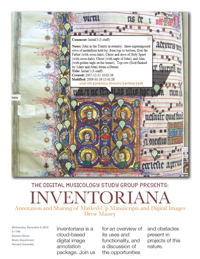
Share Inventoriana: Annotation and Sharing of Marked-Up Manuscripts and Digital Images (Drew Massey) Dear colleagues, I am pleased to invite you to the third talk in the Digital Musicology...Read More Digital Musicology Miscellanea Dec 3 3
Share The Artist and the State: How Societies Cultivate or Obstruct Creativity In February 2010 I had the great pleasure to introduce Kent Nagano and Jürgen Partenheimer to...Read More Miscellanea Music Business Mar 4 3