Share Moving on! Dear visitor, I moved my website to http://www.matthiasroder.com. Please continue reading there!— Matthias Miscellanea May 30 1
Share AI and Future Creativity Think about a world in which intelligent agents provide services and goods via completely seamless computing...Read More Digitalization Technology Dec 28 1
Share Three Strategies to Increase Digital Competency in Teams By Matthias and Seda Röder Many small and medium enterprises today have to go through a...Read More Digitalization Jul 12 1
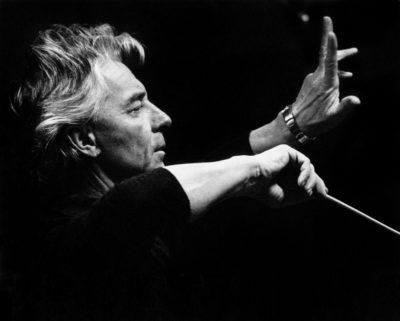
Share Artifical Intelligence and the Music of Herbert von Karajan (Keynote at Deutsche Telekom) In September, during IFA Berlin (“Europe’s Biggest Tech Show”), I was invited to speak about Artificial...Read More Digital Musicology Music Business Technology Jan 3 1
Share Developing the Future Media Market as an IMZ Ambassador I feel very honered that the board of the International Music + Media Centre (IMZ) has...Read More Miscellanea Music Business Nov 2 1
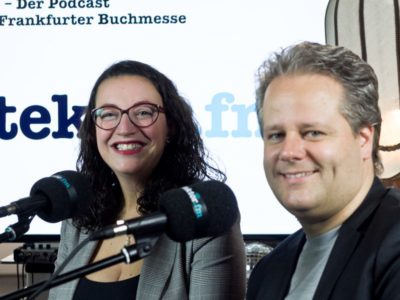
Share “We can use much more of our creative potential with the help of machines!” A podcast on the Sonophilia Network for Creative Leadership by detektor.fm that was done with Seda and I during the Frankfurt Bookfair in 2017. Click here for the original posting. Digitalization Miscellanea Technology Oct 16 0
Share Discussing Open Innovation with Young Entrepreneurs Proud to be part of #OpenInnovation discussion at Annual Conference of Young Entrepreneurs in #Austria with...Read More Technology Sep 30 2
Share “Great Art is Never Finished” Is genius something you are born with? As this wonderful film shows, the greatest artists always...Read More Films Jul 19 2
Share Trailblazing into the Digital Age: How the Karajan Institute Revolutionizes the Music Industry I am very happy about this article on my work for the Karajan Music Tech Conference....Read More Music Business Apr 13 2
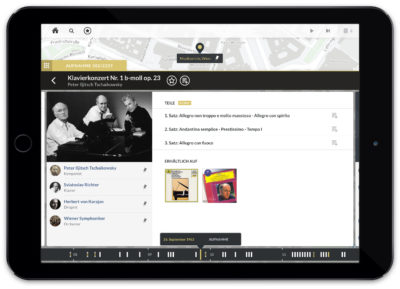
Share Carrying the Legacy of Herbert von Karajan into the Future We have just published the new Karajan iPad-App, which gives you a comprehensive overview of Karajan’s...Read More Music Business Technology Mar 27 2
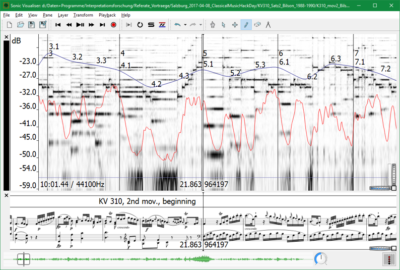
Share Understanding How Humans Make Music (Through Data) This is an awesome day! We just got the news of a major grant from the...Read More Digital Musicology Mar 11 2
Share Classical Music, VR Technology and a Subterranean Club in Leipzig Last summer I had a surprise visitor in the Karajan Institute in Salzburg. A young musician...Read More Miscellanea Dec 15 3
Share Why Classical Music Needs Hackathons The Eliette and Herbert von Karajan Institute and the MIT Music Department are hosting a Classical...Read More Technology Sep 2 2
Share Listening Faster: How Digital Humanities is Transforming Music Scholarship MIT Tech TV Computers have altered so many aspects of musician's lives, from digital performance, to...Read More Miscellanea Mar 16 2
Share Klangbilder Hör’ ich das Liedchen klingen (Robert Schumann) Click here to hear the music that goes...Read More Miscellanea Jun 18 2
Share Workshop: Why Labels and Large Venues Don’t Matter: Building a Successful Career as a Young Performer This workshop addresses the fundamental challenges that every young performer faces at the beginning of their...Read More Music Business May 18 2
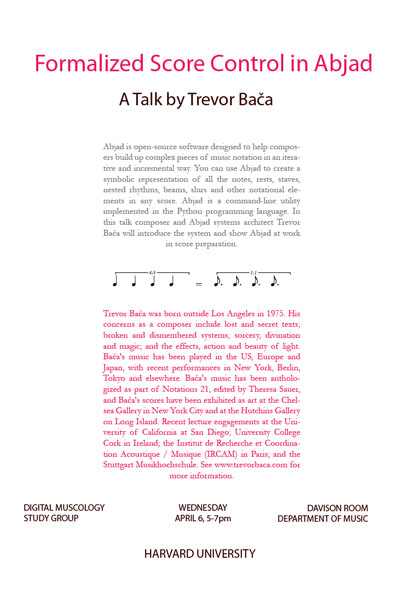
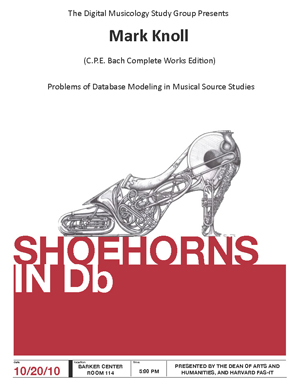
Share Formalized Score Control in Abjad I am pleased to invite you to the next talk in the Digital Musicology Study Group...Read More Digital Musicology Musicology Apr 3 2
Share From Representational Splendor to Cultural Edification: The Role of Music in Eighteenth-Century Prussian Politics American Society for Eighteenth-Century Studies. Vancouver, March 18, 2011 Musicology Mar 19 2
Share SASHA: Saxophone Audio Search and Heuristic Analysis (Eliot Gattegno and Josiah Wolf Oberholtzer) Dear colleagues: I am pleased to invite you to the next talk in the Digital...Read More Digital Musicology Miscellanea Mar 7 3
Share Working with Incubus in Santiago de Chile Back in October I helped out American rockband Incubus to put together a Youth Orchestra for...Read More Music Business Dec 11 2
Share New Course at Harvard: Applying Practices and Perspectives of Contemporary Musicians to Songwriting and Composition Mike Einziger from Incubus and I are going to teach a course on inspiration and creativity...Read More Teaching Dec 7 2
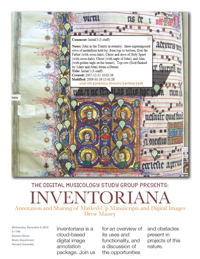
Share Inventoriana: Annotation and Sharing of Marked-Up Manuscripts and Digital Images (Drew Massey) Dear colleagues, I am pleased to invite you to the third talk in the Digital Musicology...Read More Digital Musicology Miscellanea Dec 3 3
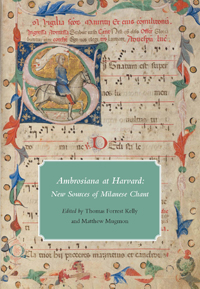
Share Ambrosiana Article Download “Milanese Chant in the Monastery? Notes on a Reunited Ambrosian Manuscript,” (Co-authored) in: Ambrosiana at Harvard....Read More Musicology Dec 3 3
Share 2nd Talk of the Digital Musicology Study Group Dear colleagues, I am delighted to announce the second talk of the Digital Musicology Study Group...Read More Digital Musicology Musicology Nov 21 3
Share Digital Musicology Study Group at Harvard University Dear colleagues, I am delighted to announce the first talk of the Digital Musicology Study Group...Read More Digital Musicology Musicology Technology Oct 15 3
Share Belfast Conference Paper “The Permutation Fugue and Johann Sebastian Bach’s Compositional Development” Paper held at the The 14th Biennial...Read More Conferences Musicology Jul 4 3
Share The Artist and the State: How Societies Cultivate or Obstruct Creativity In February 2010 I had the great pleasure to introduce Kent Nagano and Jürgen Partenheimer to...Read More Miscellanea Music Business Mar 4 3
Share The Scribe Database In 2001, while I was an intern at the Bach-Archiv in Leipzig I developed a prototype...Read More Musicology Technology Oct 17 3
Share Between Representation, Entertainment, and Music Cultivation: Public Concerts in the Hotel Stadt Paris in Late Eighteenth-Century Berlin In March 2010 I will participate in a panel at the annual meeting of the American...Read More Conferences Musicology Oct 12 3